

Environmental benefits of cultivated meat: groundbreaking LCA study by BeneMeat
Praesent sagittis lacus a lorem pretium, in commodo lorem ultricies. Donec pharetra, ipsum vel maximus tempor, ex justo pulvinar nulla, ut vulputate nibh elit sed magna. Integer finibus sapien sed turpis fermentum, vel tincidunt est egestas. Pellentesque habitant morbi tristique senectus et netus et malesuada fames ac turpis egestas. Etiam dignissim, lacus non condimentum tristique, nunc justo viverra nulla, eget congue purus elit ac urna.
The study is based on data derived from real technology, prepared for the factory that BeneMeat is currently building near Prague. “This LCA study provides the first comprehensive insight into the actual impacts of industrial meat cultivation. Our findings demonstrate that this technology has enormous potential, in terms of environmental impacts, and achieves significantly better results than, for example, traditional beef production,” the study’s lead author, Dr. Ing. Miroslav Žilka, Ph.D., from the Czech Technical University in Prague, says. Ing. Petr Bubeníček, Head of Production at BeneMeat, emphasizes that the study includes, among other factors, all of the input materials, which account for more than half of the total emissions per kilogram of meat. This implies that the cultivation technology is so optimized and efficient that most of the related emissions occur outside the biotechnology facility - at the raw material suppliers.
Key findings from the study include:
Land use: Currently, only 3.1 m² (including the growing of the necessary raw materials) is needed to cultivate 1 kg of meat (less than for any conventional farmed meat). The study predicts a future reduction to 2.0 m² per kilogram.
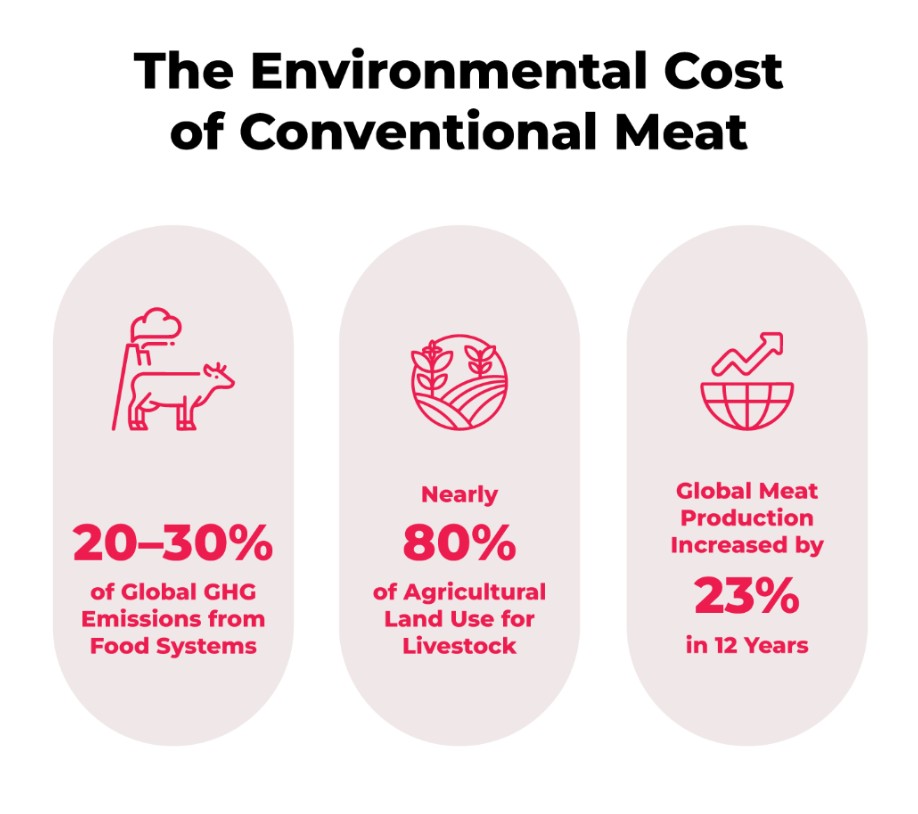
Greenhouse gas emissions (carbon footprint): Currently, 5.28 kg of CO2 equivalent (CO2 eq.) emissions are produced per kilogram of meat, which is less than most meats from conventional farming. The study predicts a gradual decrease to 3.29 kg CO2 eq. For comparison, producing 1 kg of beef generates between 20 and 100 kg of CO2 eq., depending on the type of farming (Ourworldindata, 2020). This value includes not only all necessary raw materials and energy, but also the impacts of producing all of the equipment needed for cultivation, as well as all of the other inputs.
The comprehensive independent review of the study was conducted by Professor Jon McKechnie from the University of Nottingham, who specializes in cost-effective resource utilization strategies contributing to environmental sustainability goals. He confirmed that the study was conducted in accordance with established standards, with the key results presented transparently and adequately.
More detailed information about the LCA study will be presented by its author, Dr. Ing. Miroslav Žilka, Ph.D., at the 10th annual ISCCM10 conference for experts in cultivated meat, in the Netherlands on November 19th, 2024. The results will also be published in a scientific journal. “We believe that this study marks a key milestone in understanding the environmental impacts of cultivated meat, and confirms its potential as a sustainable source of protein,” Ing. Tomáš Kubeš, Head of Strategic Projects at BeneMeat adds.
Cultivated meat
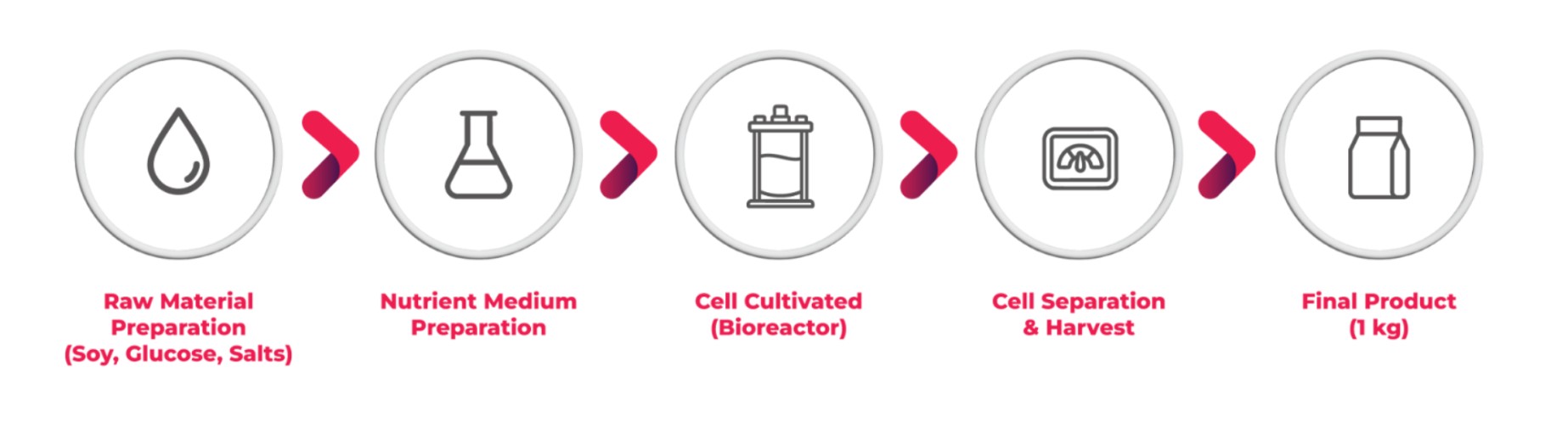
Cultivated meat, also known as cultured meat or cell-based meat, is real animal meat produced by directly growing animal cells in a controlled environment instead of raising and slaughtering animals. The process begins with a small sample of animal cells, which are nourished with essential nutrients and guided to form muscle, fat, and connective tissue, replicating natural biological growth. The result is meat that is biologically identical to conventional meat but can be produced more sustainably, with lower environmental impact and improved animal welfare. A term Cultivated meat refers to meat (including muscle cells, fat cells, connective tissue, blood, and other components) produced by cultivating animal cells, not by slaughtering a live animal. (Source: New Harvest – a research institute that aims to accelerate progress in cellular agriculture).
BeneMeat
BeneMeat is a biotech company, part of the BTL Group, focused on developing scalable and efficient cultivated meat production technology. Since 2020, the company has developed deep, end-to-end expertise across biology, chemistry, hardware, software, and commercial implementation of cultivated meat. With 100+ R&D experts, BeneMeat is building the complete technological ecosystem, from versatile cell line development to scalable, reliable, and cost-effective manufacturing solutions. The company is prepared to support manufacturers through all the key challenges of bringing cultivated meat to market: technical, legal, regulatory, and commercial. BeneMeat is the first in the EU to be registered as a producer of cultivated meat for pet food (Autumn 2023), proving our regulatory leadership in this space. “We are not just another company in cultivated meat, we are the technology partner shaping its future.”
For more information, contact: media@benemeat.com